
Silicone vs Rubber Radiator Hoses: Is the Upgrade Worth It?
 .

Table Of Contents
Silicone radiator hoses are worth considering when you’re replacing worn hoses on a diesel truck you plan to keep. Heat resistance is one reason to choose them, but material alone doesn’t tell you how long a hose will last. Fitment, hose construction, coolant condition and installation all matter.
A quality rubber replacement can also be a sensible choice. Here’s what to compare before ordering.
What silicone offers
Silicone coolant hose is used for high-temperature applications and resistance to weathering and ozone. Check the specifications for the actual hose rather than assuming every silicone product has the same rating.
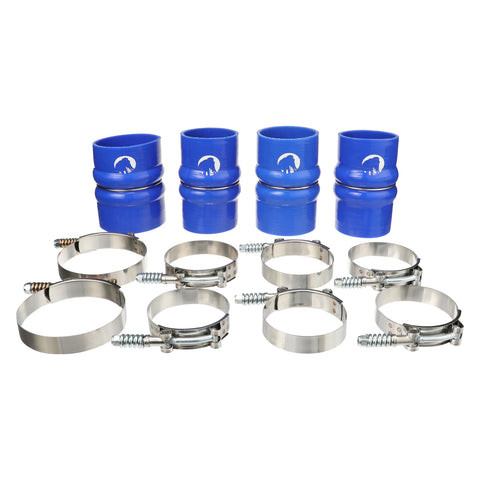
For example, Mammoth’s 1994–1997 Cummins radiator hose kit lists reinforced silicone construction and a maximum temperature rating of 350°F. That is a hose rating, not a recommended engine operating temperature.
For your truck, start with the correct application and then compare the product’s specifications, included parts and warranty.
The trade-offs to understand
Price: Compare the complete replacement cost, including any clamps or other parts required. Silicone kits commonly cost more than basic rubber replacements.
Water permeability: Water can pass through a hose wall without a visible hole. Silicone coolant hose can allow more water through than EPDM rubber. The amount depends on the hose and operating conditions; published results for another manufacturer’s hose or a large commercial truck do not establish the loss from your pickup.
Check coolant level and concentration as directed by your vehicle’s service information. Don’t dismiss a falling level, wet connection or coolant stain as normal permeability. Find the cause.
Clamps and installation: The clamp must suit the hose, fitting and application. Tightening harder is not a substitute for the correct parts or installation procedure.
Service life: Neither material makes a cooling system maintenance-free. Don’t choose a replacement based on an unsupported promise that it will never leak or last a fixed number of years.
Check the hoses you already have
Rubber coolant hoses can deteriorate internally as well as externally. Electrochemical degradation can create damage near the hose ends that isn’t obvious from a quick look.
With the engine off and the cooling system completely cold, inspect accessible hoses for cracks, swelling, rubbing and coolant residue. When appropriate for the hose design, compare how it feels near the connections with the middle. Unusually soft areas or internal ridges warrant closer inspection.
A visual or squeeze check does not rule out every fault. Follow the vehicle’s inspection guidance and have questionable hoses assessed before they fail.
Do silicone radiator hoses add horsepower?
Replacing a sound radiator hose is not a horsepower upgrade. Radiator hoses carry coolant, and this replacement should not be presented as a cure for poor fuel economy or an unrelated overheating problem.
If the engine is overheating, diagnose the cooling system rather than assuming a different hose material will solve it.
Choose the right replacement for your diesel
Before ordering, check:
- Truck model, model year and engine.
- Any build-date or application notes on the product page.
- Which hoses and hardware the kit actually includes.
- Connection styles and routing, especially if the truck has been modified.
Don’t assume a kit fits because another truck has the same engine displacement.
Browse the application that matches your truck:
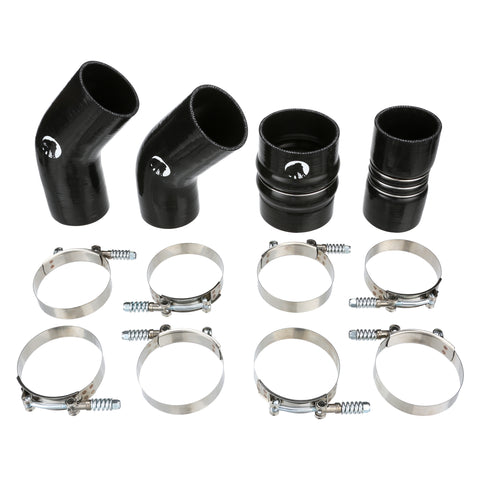
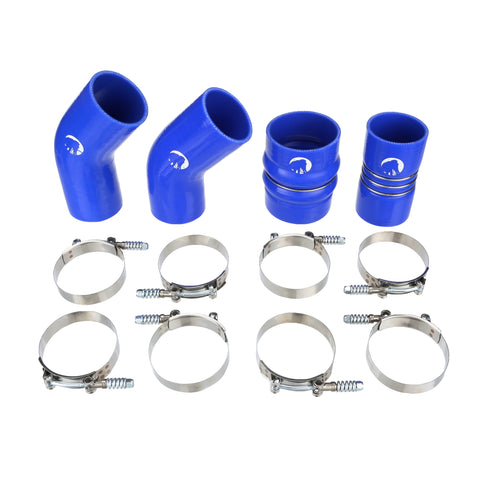
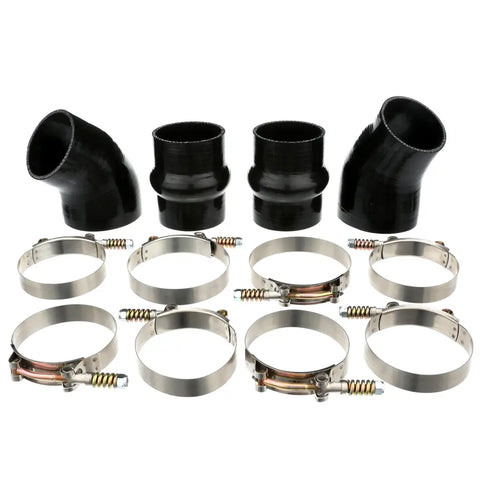
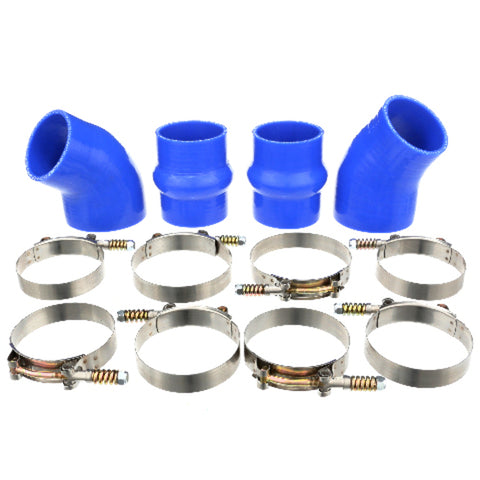
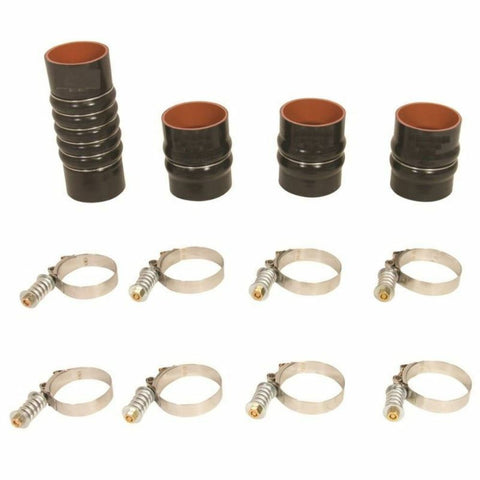
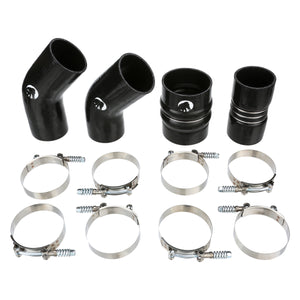
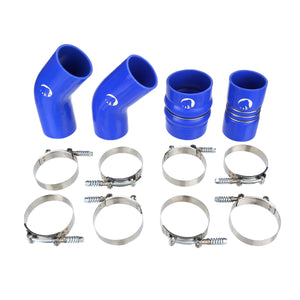
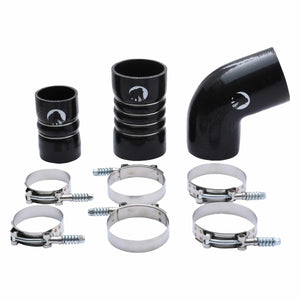
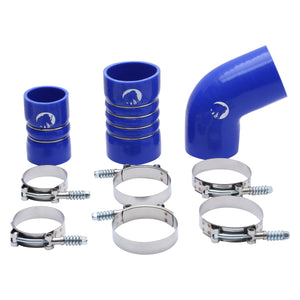
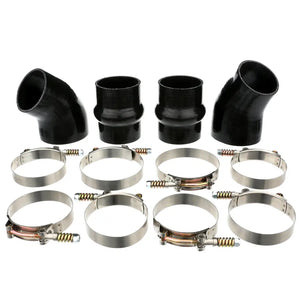
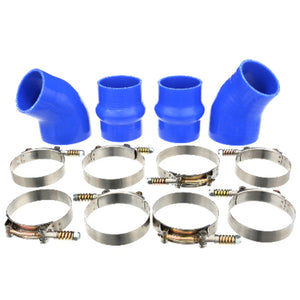
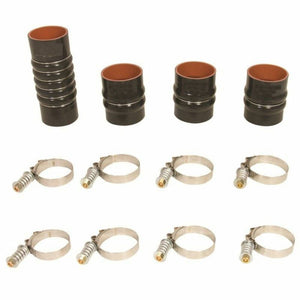
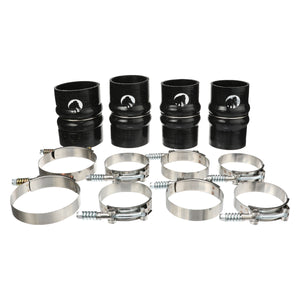
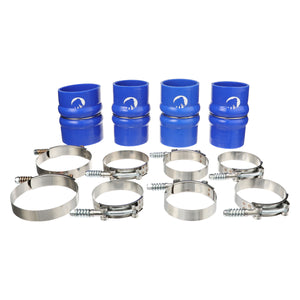
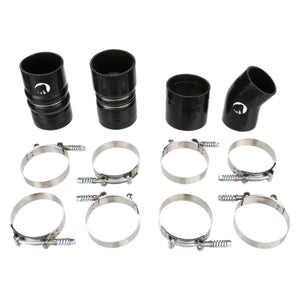
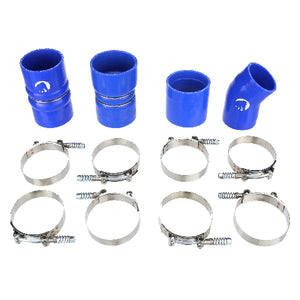
- Dodge Ram Cummins coolant hose kits
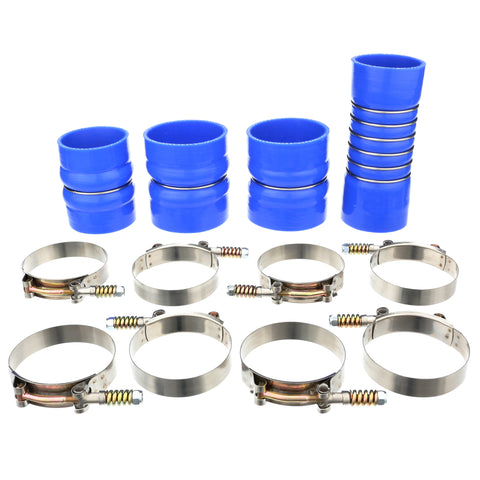
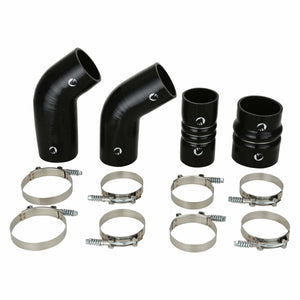
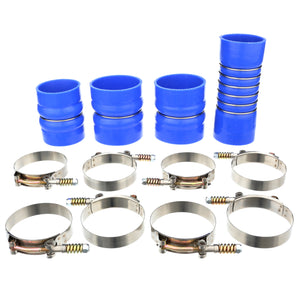
- Ford Powerstroke coolant hose kits
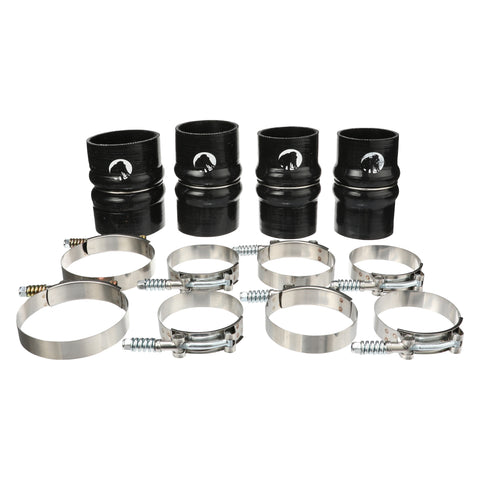
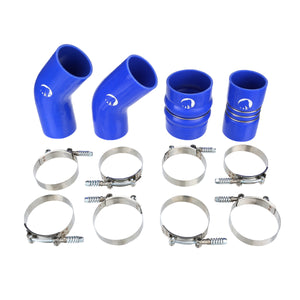
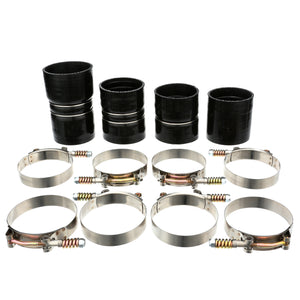
- Chevy/GMC Duramax coolant hose kits
What about heater hoses?
Mammoth’s reinforced silicone hose sold by the foot comes in five inside diameters, from 3/8 inch to 1 inch. Its listing excludes fuel and oil use.
Straight bulk hose is not automatically a replacement for a molded radiator hose or a hose with special connectors. Check the application, diameter and routing first. Our heater hose sizing guide explains what to measure.
Install it according to the application
Work only on a completely cooled system. Follow the vehicle’s instructions for draining, filling and bleeding coolant, and use its specified coolant.
Follow the hose and clamp manufacturers’ installation and tightening instructions. There is no single torque setting for every coolant hose clamp. Inspect the finished installation for leaks and follow the applicable service instructions for subsequent checks.
If you need help choosing a clamp size, see how to size a T-bolt clamp. The required clamp type still depends on the connection.
Mammoth’s lifetime warranty
Mammoth products are backed by a lifetime limited warranty, subject to its terms, eligibility requirements and exclusions. Keep your purchase receipt and review the policy for coverage and claims.
Technical references
Featured products


Diesel engines have come a long way since they entered the market early in the 20th century. Modern diesel engines continuously evolve, incorporating more...
Hoses in cars may seem like hidden helpers, but they're vital for keeping your vehicle running smoothly. These flexible tubes...

Use this hose clamp size chart to measure installed-hose outside diameter, compare the clamp's stated range, and select a compatible spring-loaded T-bolt clamp.