Why Does the 6.7 Powerstroke Have Two Coolant Reservoirs?
 .
Table Of Contents
The 6.7 Powerstroke has two coolant reservoirs because it has two separate cooling circuits. One handles engine cooling; the other runs at a lower temperature and serves components including the charge-air cooler. They are not interchangeable overflow bottles. Knowing which circuit you are looking at helps you describe a coolant problem and avoid ordering the wrong hose.
Primary vs secondary cooling: the simple version
Ford describes the primary circuit as the engine's high-temperature cooling system. The secondary circuit is a separate, lower-temperature system. Each has its own radiator, coolant pump, thermostats and reservoir, also called a degas bottle. See Ford's 6.7L diesel technical overview, cooling-system section.
- Primary: the engine-cooling circuit.
- Secondary: the lower-temperature circuit that includes charge-air cooling.
The components served by each circuit vary with model year and equipment. Do not use a diagram for a newer High Output engine as the routing guide for an older truck. Use the underhood diagram and service information for your exact vehicle to identify both reservoirs.
Why the intercooler needs coolant
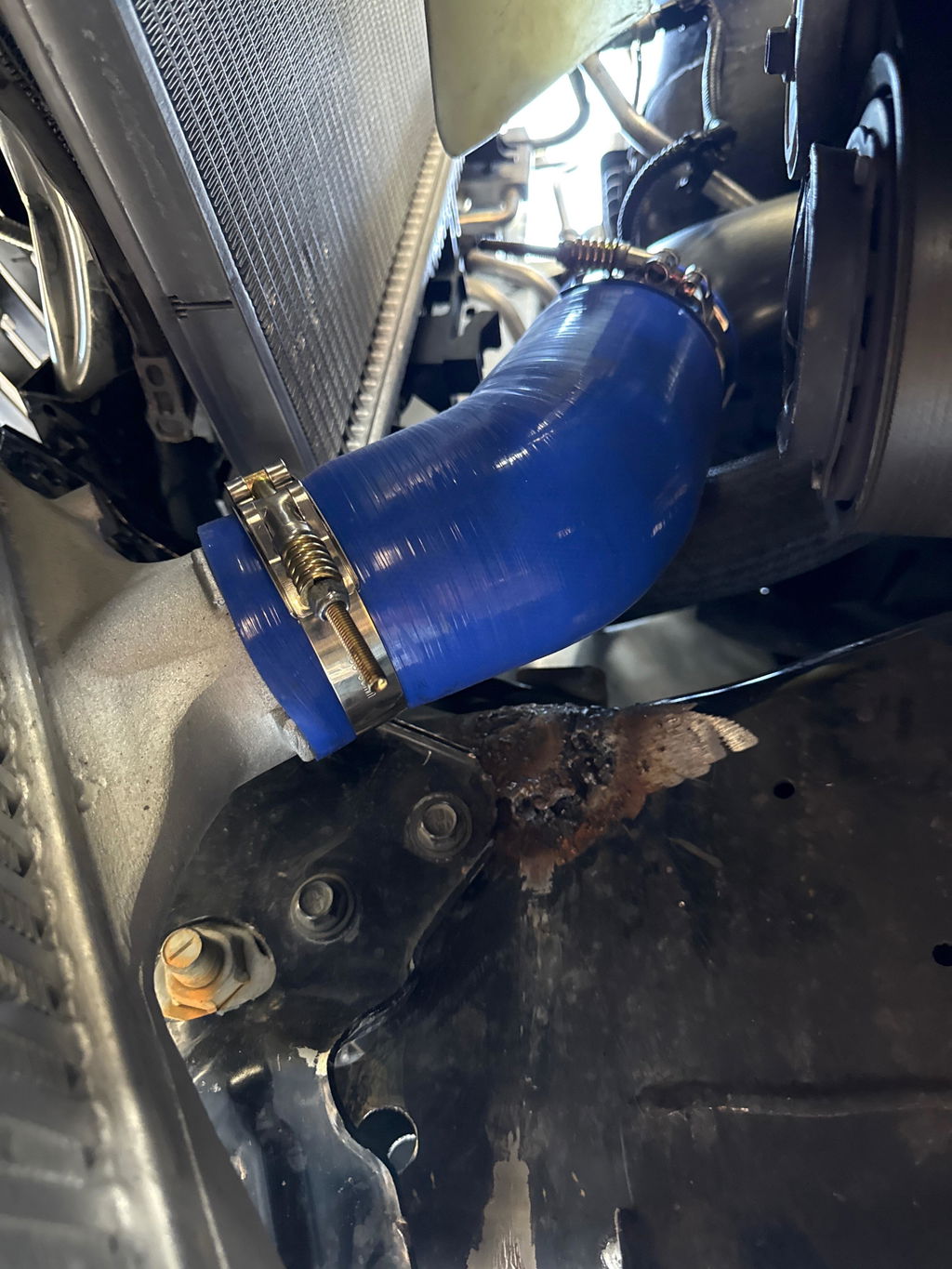
The 6.7 Powerstroke's charge-air cooler uses liquid cooling to remove heat from the compressed intake air. That creates two different things to identify around the intercooler: the air path through the pipes and boots, and the liquid-coolant connections.
A listing that says “intercooler pipe” or “intercooler boot” does not automatically mean coolant plumbing. Before buying a part, answer this question: Does the damaged connection carry charge air or coolant? A photo showing both ends of the connection is more useful than a close-up of a loose clamp alone.
Check both reservoirs, not just the easiest one to see
Ford's 6.7L diesel coolant-check instructions call for checking coolant with the engine cold. Compare the level with the reservoir's marks. Never remove a cap while the engine is running or the cooling system is hot: pressurized coolant can cause burns.
Use the coolant specification and refill procedure for your truck. Do not choose coolant by color alone or mix types indiscriminately. A system that has been drained or become very low needs the applicable refill procedure, not just a quick top-up. Ford also warns against stop-leak products and unspecified additives.
For a useful service record, photograph each cold reservoir and label the photos “primary” and “secondary” after identifying them in the manual. Add the date and mileage. If a level changes, you can show the shop which circuit changed instead of reporting only that “the coolant is low.”
What if only one reservoir keeps dropping?
Do not assume the other reservoir's normal level rules out a problem. Tell the technician which one is losing coolant, whether the truck recently had cooling-system work, and whether you have noticed a puddle, warning message or overheating.
Ask for diagnosis of the affected circuit before ordering parts. A low level is not enough to identify a failed hose, cooler or pump. Repeatedly adding coolant is not a repair, and replacing charge-air boots is not a substitute for finding a coolant leak.
Which Mammoth parts are relevant?
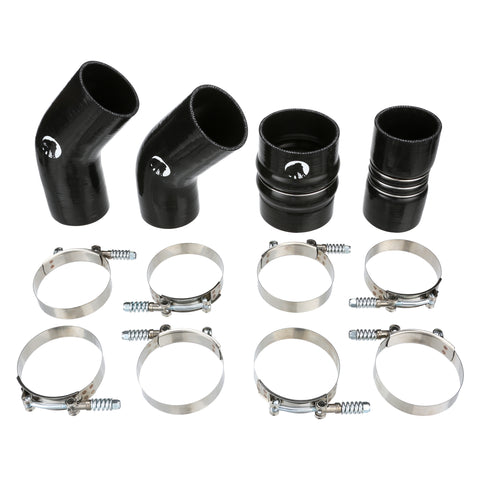
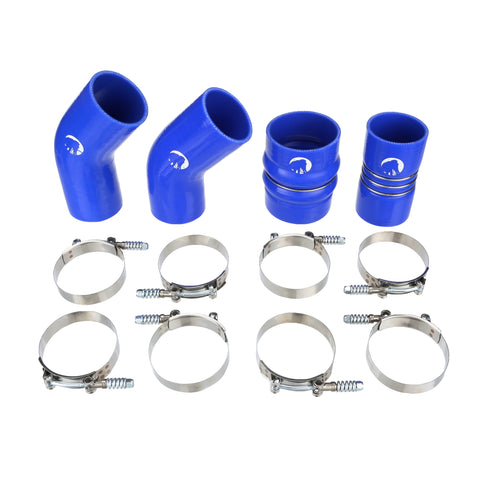
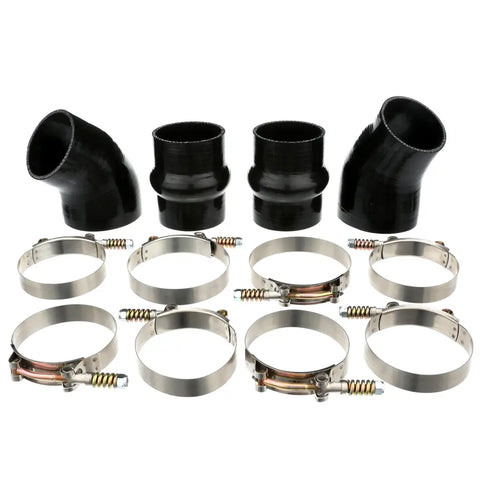
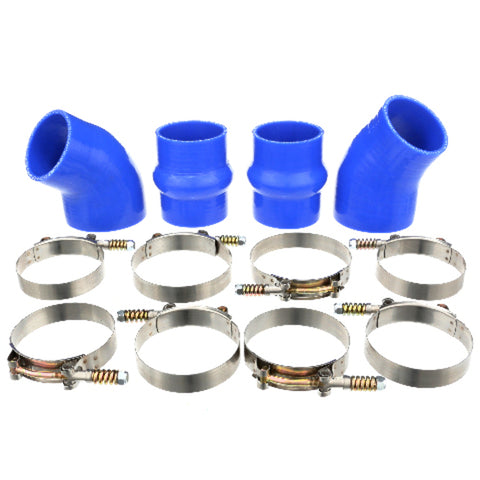
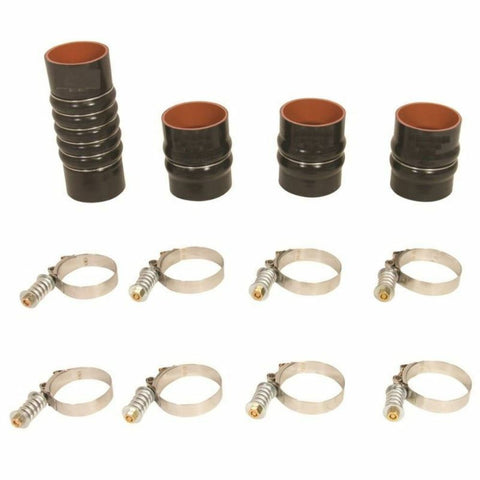
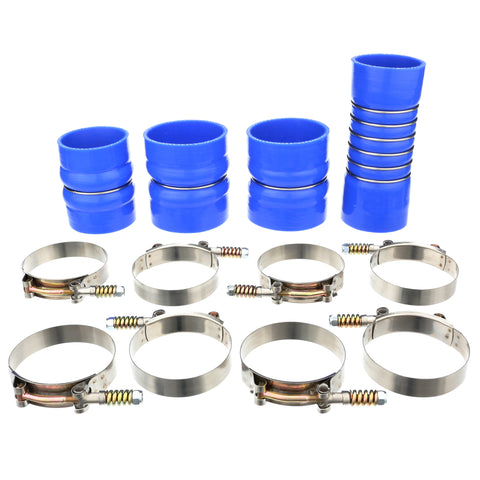
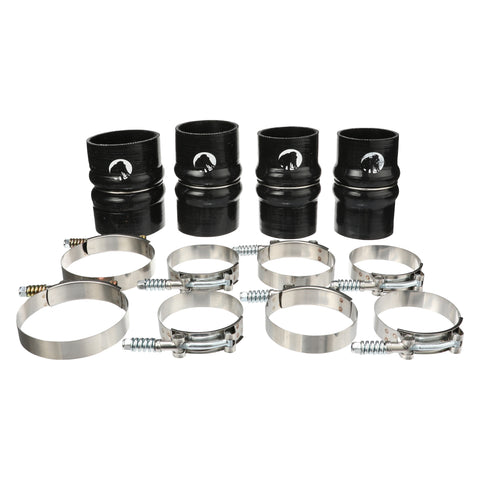
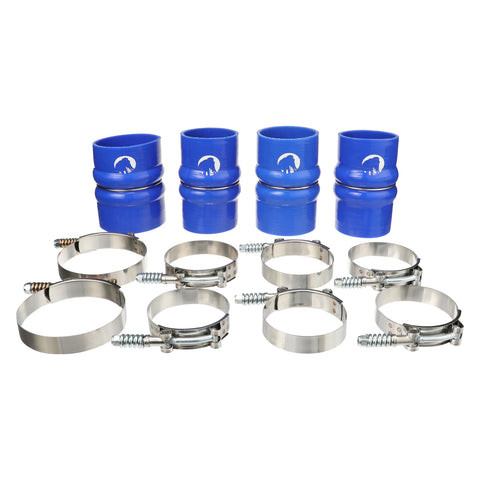
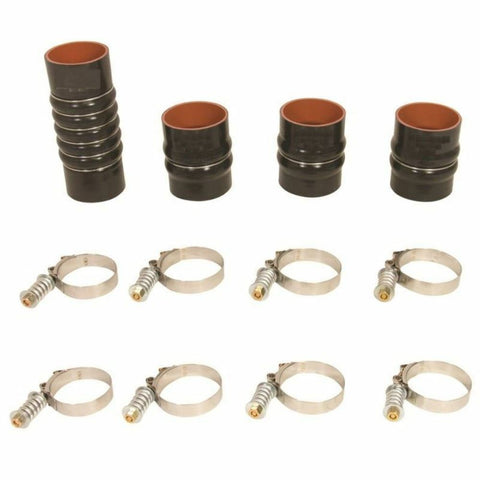
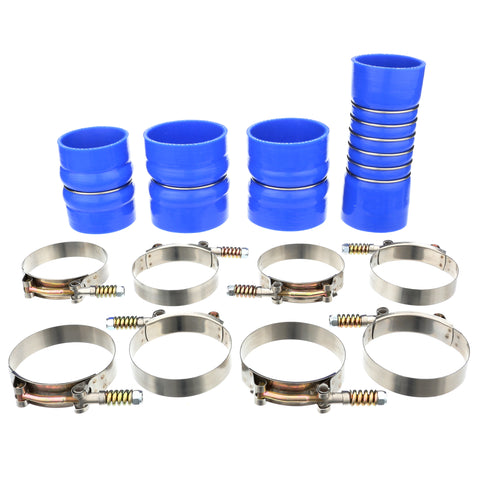
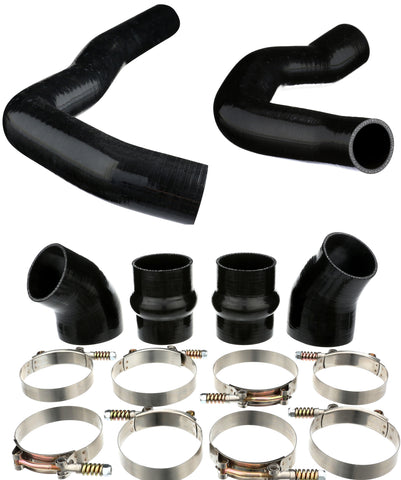
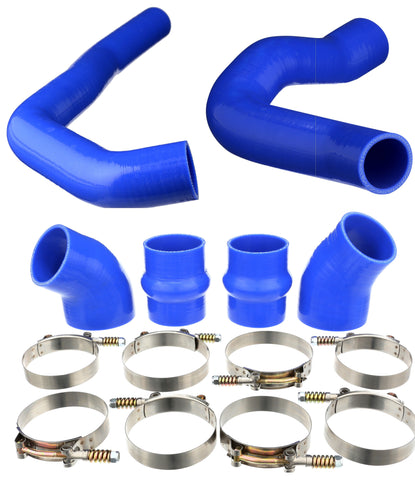
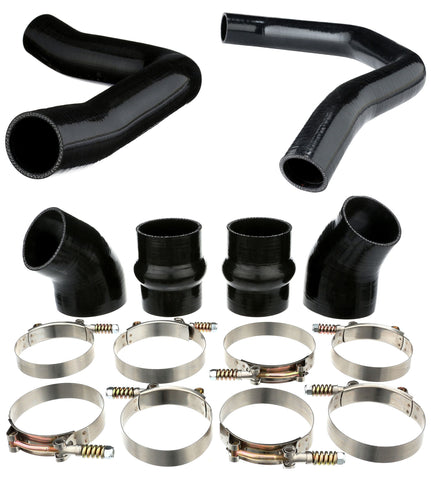
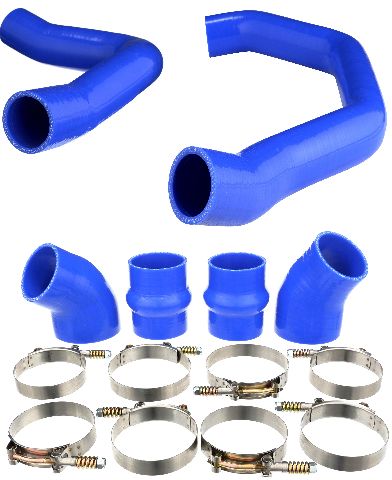
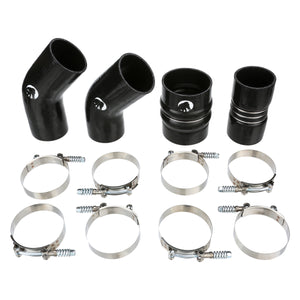
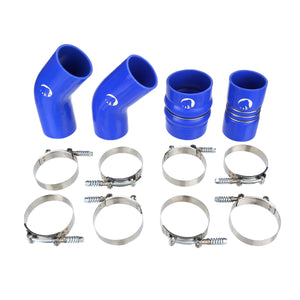
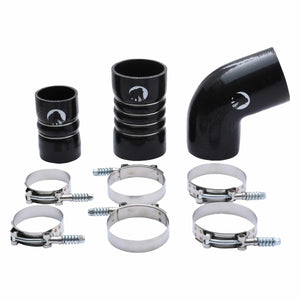
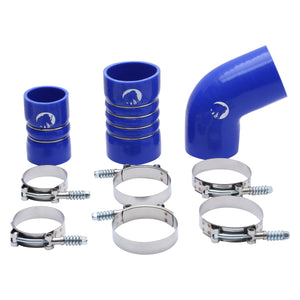
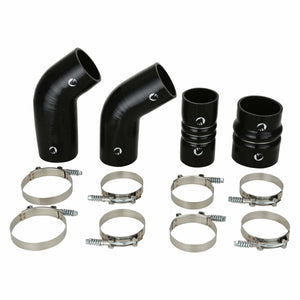
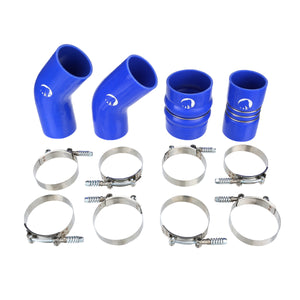
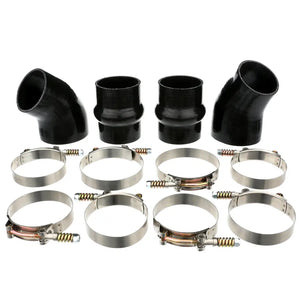
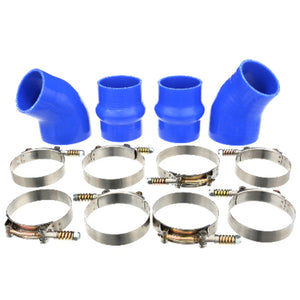
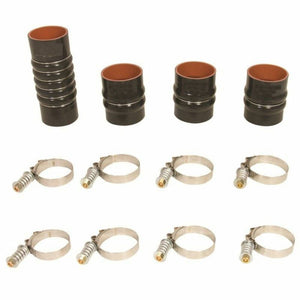
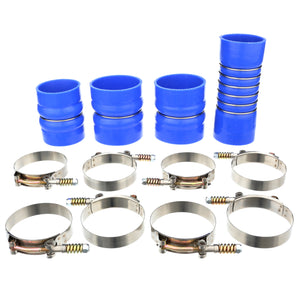
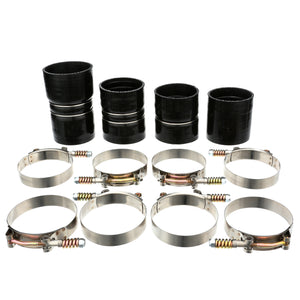
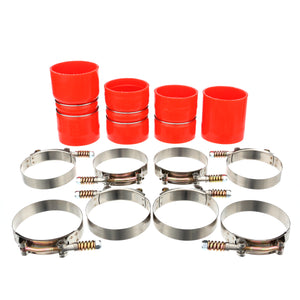
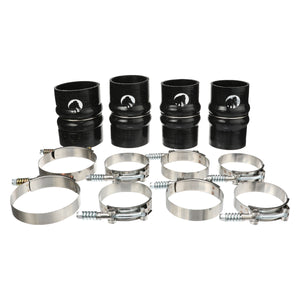
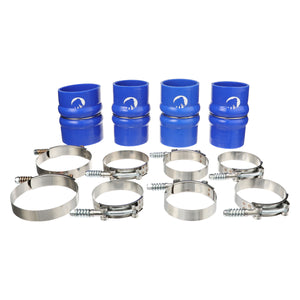
Our 2011–2016 6.7 Powerstroke intercooler pipe and boot kit is for the charge-air side. It includes hot- and cold-side pipework, four silicone boots and eight constant-tension T-bolt clamps. It is not a replacement for either circuit's coolant hoses.
Use our 6.7 Powerstroke pipe-kit guide if you have identified a damaged air pipe or boot. Do not extend the kit's 2011–2016 fitment to later trucks.
For other Ford engines, the Powerstroke coolant-hose guide separates radiator-hose applications by engine, year and relevant fitment details. A kit for a 6.0 or 6.4 is not a substitute for a 6.7 kit.
Quick answers
Are both bottles for engine coolant?
Both belong to cooling circuits, but they serve separate systems. Identify the circuit rather than treating the bottles as one shared supply.
Will intercooler boots fix coolant loss?
Charge-air boots connect the air-side pipework. Choose them for a confirmed problem with those connections, not simply because coolant is disappearing.
What should I send when asking about a replacement?
Contact Mammoth with the model year, engine, truck model and clear photos of the damaged part and its connections. Say whether you need coolant plumbing or charge-air pipework. That distinction comes before choosing a kit.
Featured products






Diesel engines have long been the default option for light-duty/heavy-duty truck buyers. However, like gasoline-powered engines, they can also break...

The best diesel pickup engine is the one that suits your work, budget and the condition of the truck you’re buying. An engine’s reputation is...

The 7.3 Powerstroke, a legendary diesel engine, stands tall as a prime upgrade candidate for several compelling reasons.