Duramax P0299: Boost Leak or Bad Turbo? What to Check First
 .
Table Of Contents
P0299 means the engine computer detected an underboost condition. A loose or damaged intercooler boot is one possible cause, so inspect the charge-air connections before buying a turbo or a boot kit. The code alone does not identify the failed part.
This guide focuses on 6.6L Duramax Silverado and Sierra HD pickups. A charge-air leak is worth checking, but restrictions, sensors and turbo controls can also need diagnosis. Start with the fault codes and the service procedure for your truck’s year and engine.
What GM says about intercooler leaks
2004–2007 LLY and LBZ
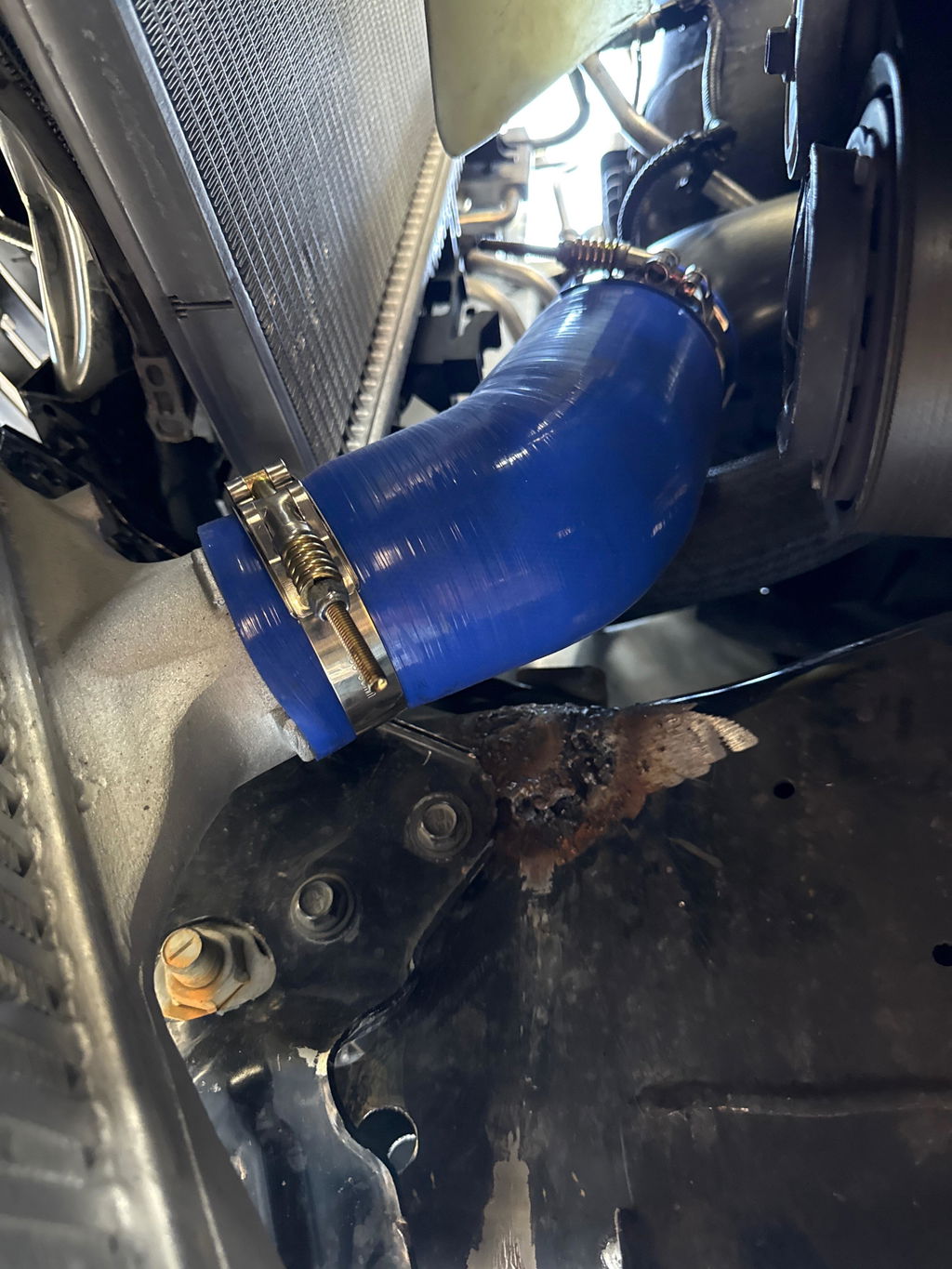
GM’s PIP3068-series guidance describes charge-air hoses coming loose during acceleration, sometimes setting P0299. It calls for inspecting the connections and replacing damaged hoses, pipes or clamps. It also notes that crankcase ventilation can leave oil residue inside LLY charge-air plumbing. Oil near a joint is a reason to inspect it, not proof that the turbo has failed. GM bulletin reproduction
2017–2019 L5P
GM bulletin 22-NA-013 identifies loose charge-air connections as a possible cause of P0299 and several other codes on these trucks. It directs technicians to check the turbo outlet, intercooler inlet and outlet, and intake airflow valve connection. A joint can look secure while parked yet move under load, so GM recommends its charge-air leak test. This bulletin replaces PIP5468. GM bulletin 22-NA-013
These are specific applications, not evidence that every Duramax with P0299 needs new boots. On an LB7, LMM or LML, inspect the charge-air plumbing too, but use that engine’s diagnostic procedure rather than applying an L5P bulletin to it.
Clues that a boot or connection needs attention
With the engine off and cool, look for:
- A boot that has separated from the pipe or moved out of position.
- A visible split, cut, swelling or rubbing damage.
- A damaged clamp or pipe end.
- Fresh oily residue around a connection, especially where dirt has collected.
A hiss, whoosh or loss of power under load can help narrow the search, but none identifies the failed part by itself. A boot may leak without looking damaged, and noise can come from other parts of the intake or exhaust.
The hot side runs from the turbo to the intercooler. The cold side runs from the intercooler toward the engine. Check both rather than assuming the leak must be on the hotter side.
A sensible diagnostic sequence
- Record all the codes before clearing anything. Note when the problem happens and whether there is smoke, unusual noise or another warning. A shop can use the stored fault information and scan data to choose the right tests.
- Inspect the accessible plumbing. Check boots, pipes, clamps and supports with the engine off and cool. Don’t reach around moving belts or a hot turbo to look for a leak.
- Have the charge-air system leak-tested. Use equipment and a procedure approved for the exact truck. Do not connect unregulated shop air or improvise a pressure limit. If you lack the proper equipment or instructions, leave the test to a diesel technician. Our boost leak guide explains what an inspection is looking for.
- Repair the confirmed fault and verify the result. Recheck the system and follow the applicable service procedure. For the L5P applications above, GM also specifies DPF-related follow-up after a charge-air repair, with different instructions if P2463 is present. A code reset and a short drive are not a substitute for that procedure.
- Continue diagnosis if the leak test passes or the problem remains. A passing test does not automatically condemn the turbo. The technician may need to check restrictions, sensor readings, boost control and the turbo itself.
Turbo manufacturer Garrett recommends a full diagnosis before replacement, including checks of the intake, fuel system and exhaust. It also warns that noise, smoke and oil consumption can have causes outside the turbo. Garrett diagnostic guidance
Choose parts after finding the leak
A loose connection may need correction rather than a new boot. A split boot needs replacement; a damaged pipe or attachment may need a different repair. Match the replacement to the failed connection, your engine and the plumbing already on the truck.
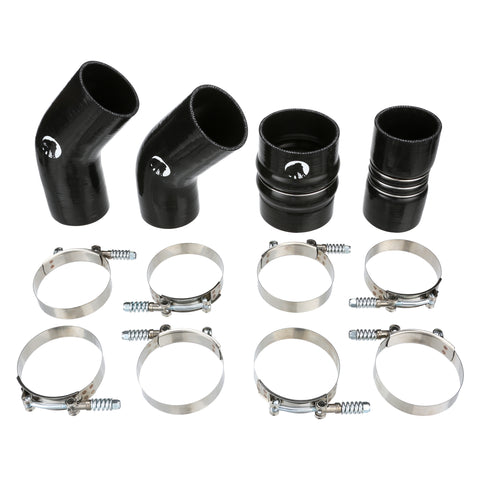
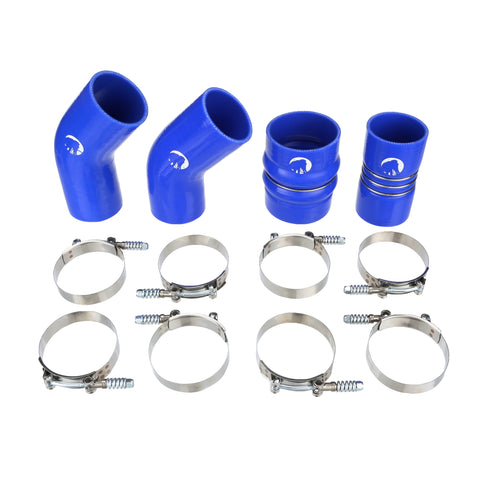
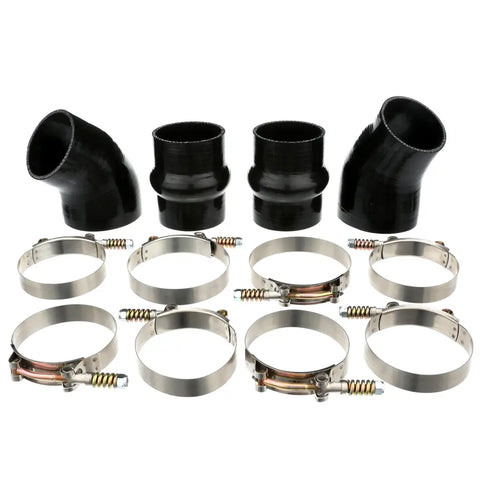
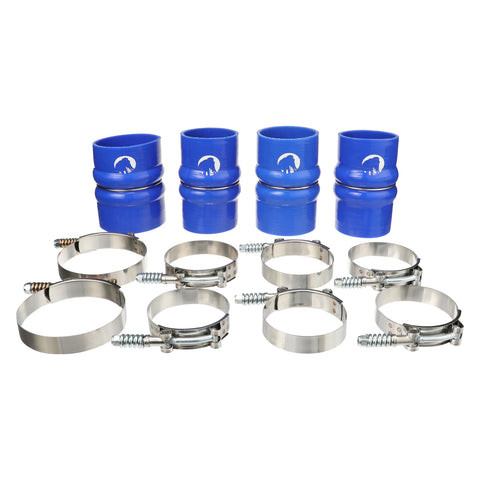
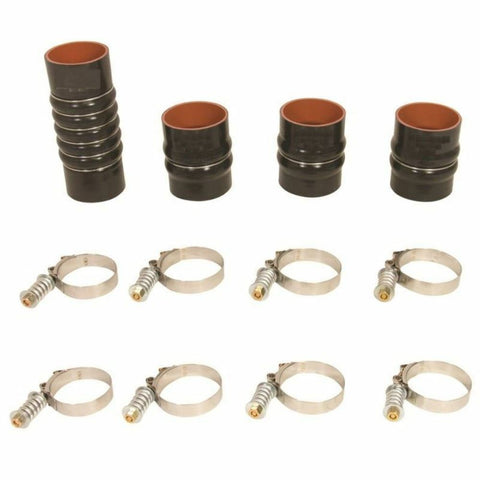
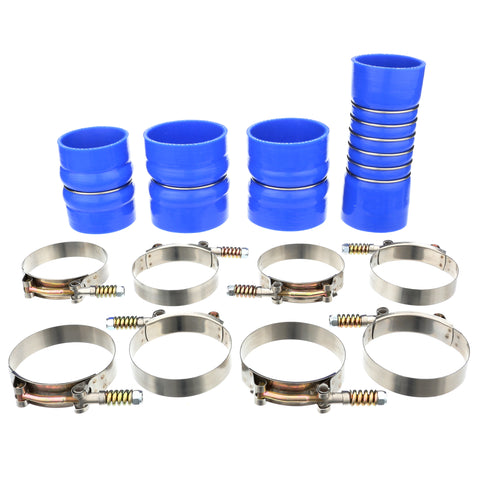
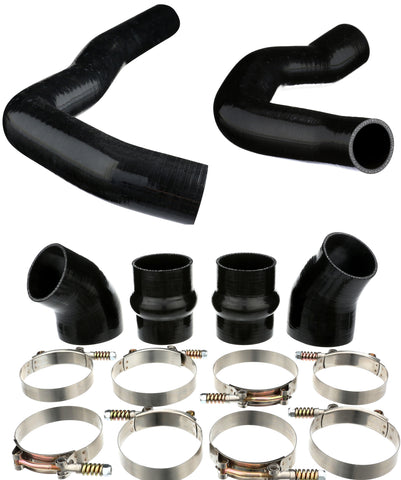
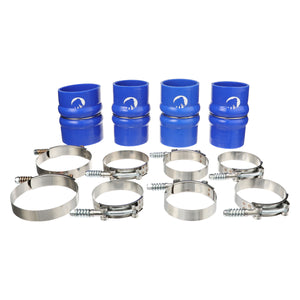
Mammoth lists these Duramax applications:
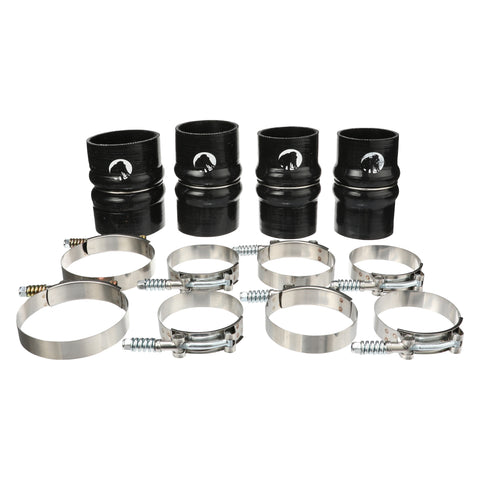
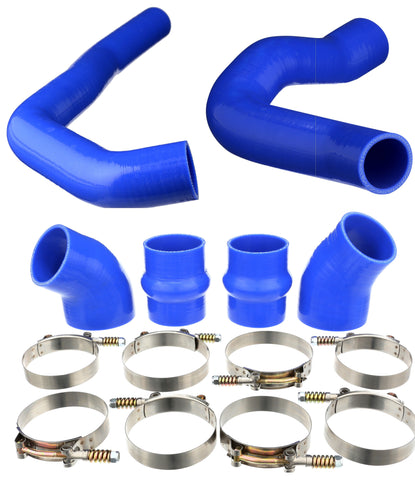
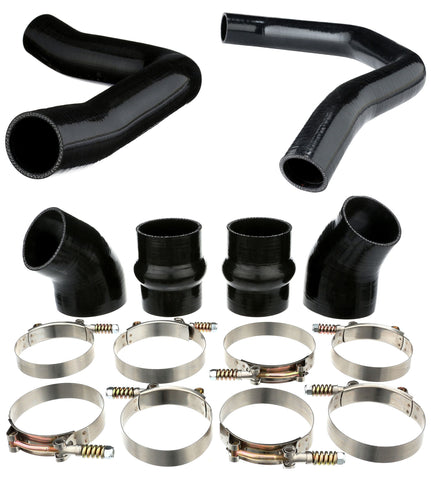
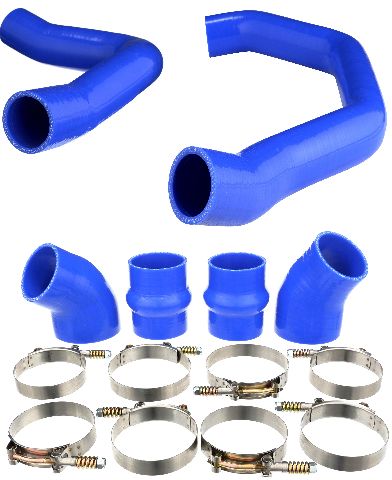
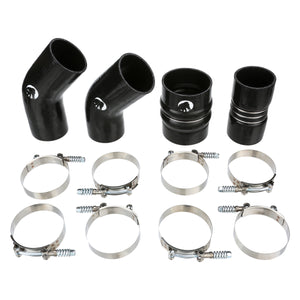
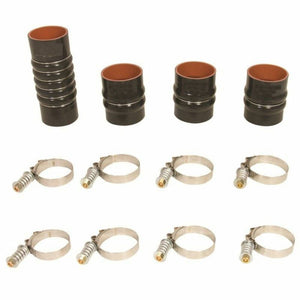
- 2002–2004 LB7: LB7 boot kit, or the LB7 pipe and boot kit when pipes also need replacement.
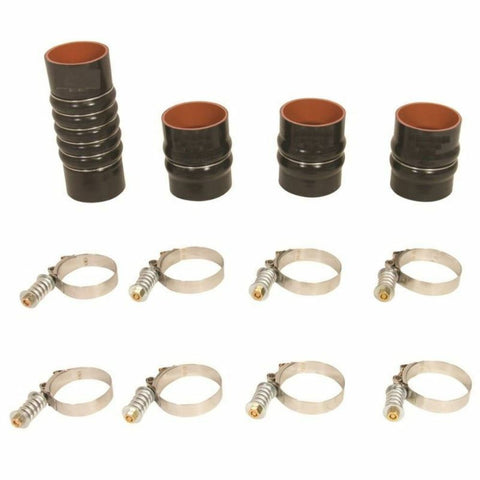
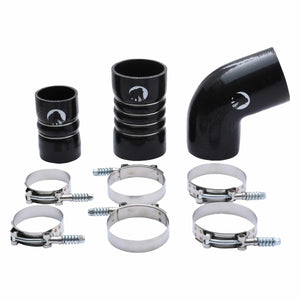
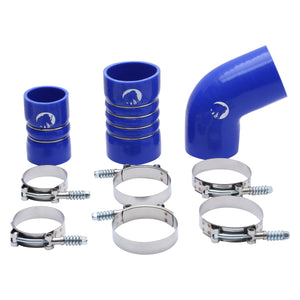
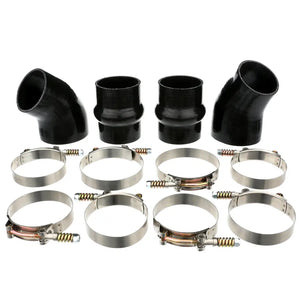
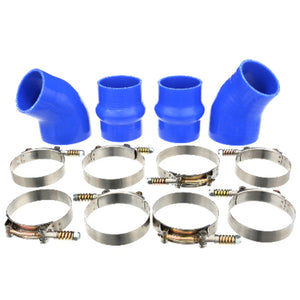
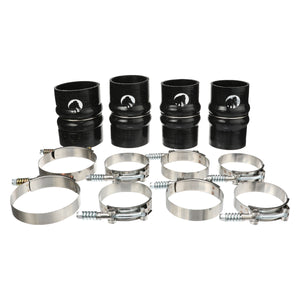
- 2004.5–2005 LLY: LLY boot kit.
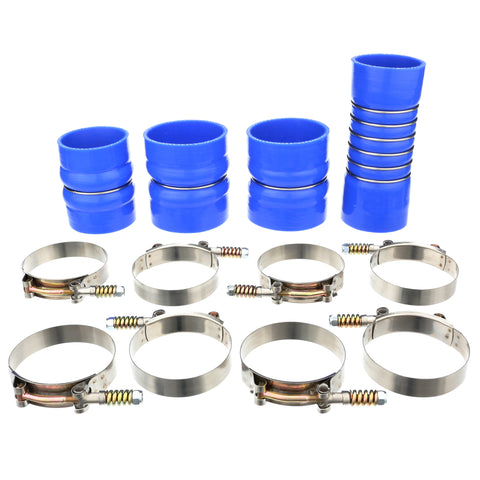
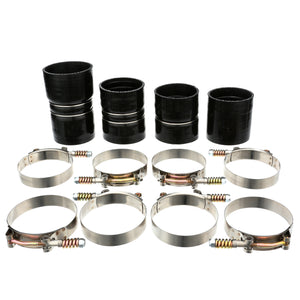
- 2006–2010 LBZ/LMM: LBZ/LMM boot kit. Confirm the engine, especially on a 2006 truck: a 2006 LLY takes the LLY boot kit, and a 2006 LBZ takes the LBZ/LMM boot kit.
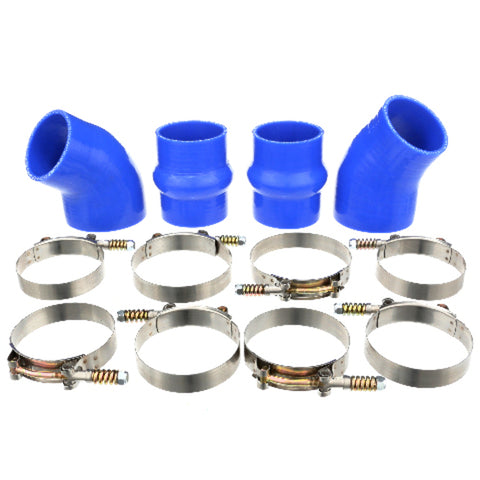
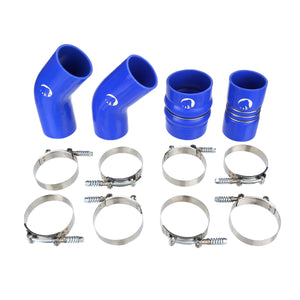
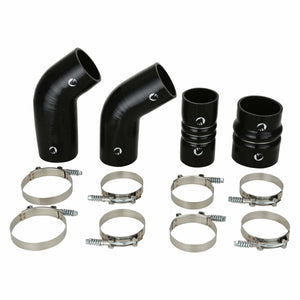
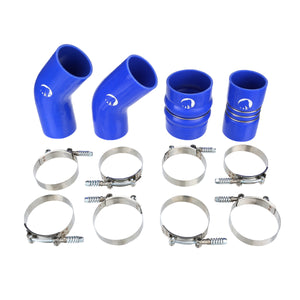
- 2011–2016 LML: Hot-side boot kit, or the LML pipe and boot kit, listed with hot- and cold-side pipes, boots and hardware.
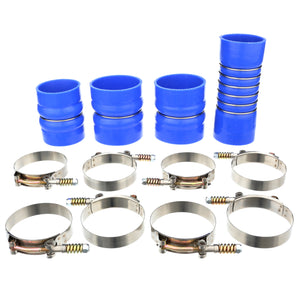
- 2017–2019 L5P: L5P intercooler kit. Confirm that the kit includes the connection you need before ordering.
For more detail, see the LB7, LLY, LBZ/LMM, LML and L5P guides.
If you have a 2001 truck, a 2020-or-newer truck, or aftermarket pipes, contact Mammoth with the year, engine and photos before ordering. Don’t choose a boot by model year alone.
Installing replacement boots
Clean and inspect the mating surfaces using the instructions for the parts you are installing. Check alignment, supports, pipe ends and clamp placement before tightening.
Use the tightening specification for the supplied clamp and boot combination. Don’t assume a factory clamp torque, sealant instruction or recheck interval applies to an aftermarket kit. If installation instructions are missing, ask Mammoth before fitting it. After installation, verify the repair with the appropriate leak test and diagnostic checks.
For replacement-clamp sizing, see our T-bolt clamp guide and spring-loaded clamp listing.
Common questions
Can I keep driving with P0299?
The code alone cannot establish whether driving is safe. Arrange diagnosis and avoid heavy towing or hard acceleration while the cause is unknown. If the truck loses power severely, produces heavy smoke, uses oil rapidly or develops abnormal mechanical noise, stop driving when safe and arrange assistance. Follow the truck’s warning messages and owner’s manual.
Does oil inside a boot mean the turbo is bad?
Not necessarily. GM documents oil residue from crankcase ventilation on the LLY. Significant oil accumulation or oil consumption needs diagnosis, but it does not identify the turbo as the cause by itself.
Should I replace one boot or the whole set?
Inspect every connection. Replace the damaged part and address any damaged clamp or pipe. A set can make sense when several boots need replacement, but P0299 alone does not justify replacing all of them.
Will new boots fix a bad turbo?
No. Boots can repair a leak at a boot connection. Confirm the cause of the underboost before ordering parts.
Does a passed leak test prove the turbo is bad?
No. The remaining diagnosis can include restrictions, sensors, controls and mechanical checks. Have the cause confirmed before replacing the turbo.
Featured products






Diesel engines have long been the default option for light-duty/heavy-duty truck buyers. However, like gasoline-powered engines, they can also break...

The best diesel pickup engine is the one that suits your work, budget and the condition of the truck you’re buying. An engine’s reputation is...

The 7.3 Powerstroke, a legendary diesel engine, stands tall as a prime upgrade candidate for several compelling reasons.