Duramax Losing Coolant? What to Check Before Replacing Parts
 .
Table Of Contents
Repeated coolant loss deserves attention, but it does not automatically mean your Duramax needs head gaskets. Radiator hoses, clamps, the surge tank, its cap and other cooling-system components can all be part of the problem.
Start by confirming the coolant level when the engine is cold, then identify where the coolant is going. If inspection does not reveal the source, have the system diagnosed before buying parts. New hoses will only solve coolant loss caused by the hoses or their connections.
Do not keep driving with a known coolant leak. Never remove a hot or pressurized coolant cap. If the truck overheats, produces steam or loses coolant rapidly, stop safely and arrange assistance.
Why a small coolant leak matters
Topping off the tank is not a repair. A small leak can continue until the system no longer has enough coolant to protect the engine.
GM's 2011–2016 Duramax bulletin warns that low coolant can damage the engine and contribute to head-gasket failure. It does not establish the cause of your truck's coolant loss. GM bulletin 16-NA-204.
Start with a cold-engine inspection
Let the engine cool completely before checking coolant or inspecting the system. Keep clear of hot components and follow the precautions in the owner's manual.
Radiator hoses and connections
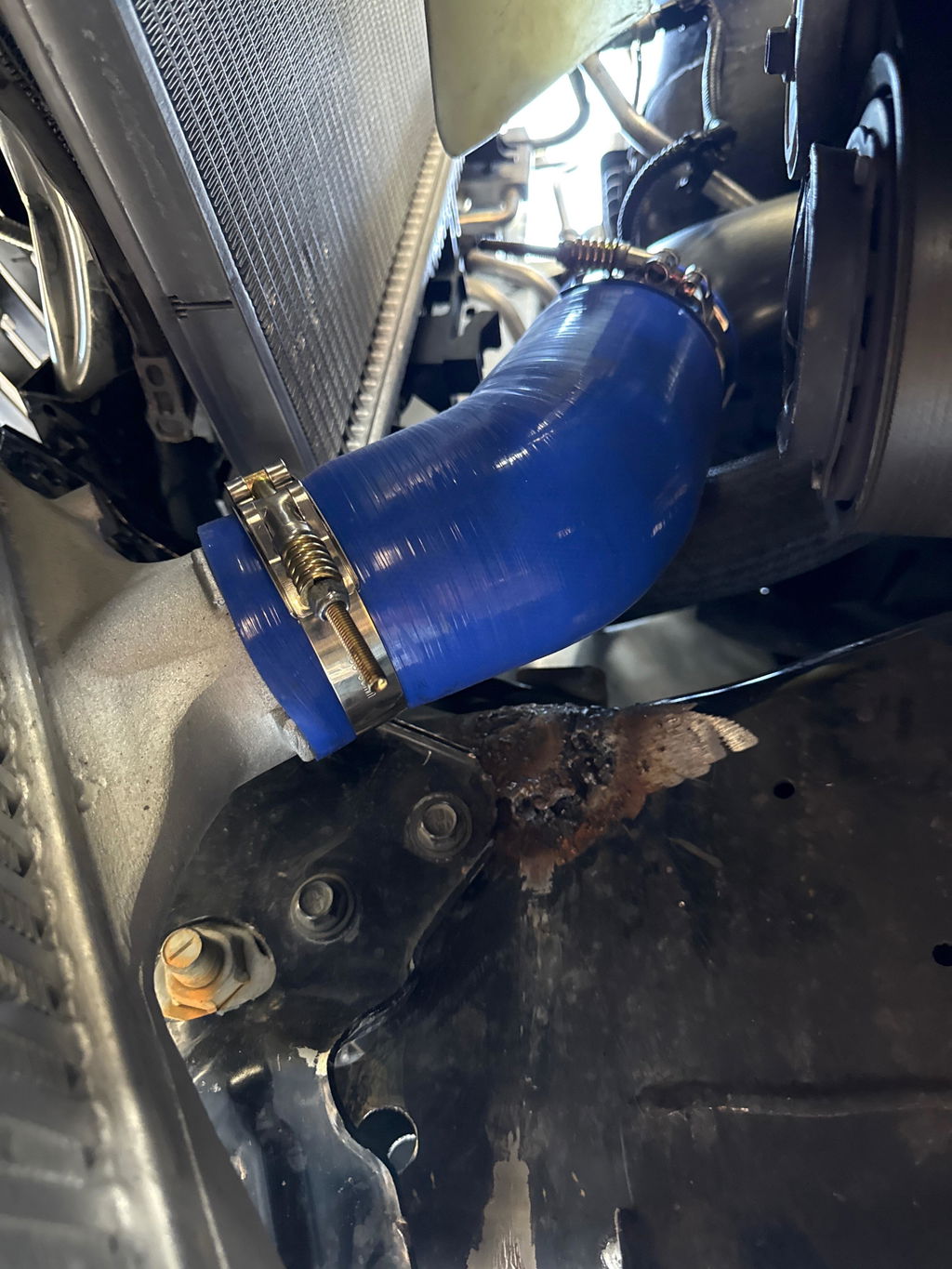
Look for wet areas, dried coolant residue, cracks, swelling, rubbing damage and loose or damaged clamps. Pay attention to the hose connections as well as the hose itself.
GM includes the lower radiator hose among possible external leaks on 2011–2016 trucks; it does not rank it as the most likely cause.
Surge tank and pressure cap
Check for damage and evidence of leakage around the tank and cap. A defective or incorrect cap can contribute to coolant loss.
For 2015–2016 Silverado and Sierra trucks, GM specifies replacing both the tank and cap when either leaks during filling. Have the technician verify applicability.
Other cooling-system components
GM also lists the block heater, water pump, radiator and engine oil cooler for those 2011–2016 applications.
A leak may be difficult to see. Coolant can leave residue instead of a puddle, and the visible drip may not be directly beneath its source. If you cannot locate it, have a qualified shop follow the appropriate diagnostic procedure rather than replacing parts by guesswork.
Was the cooling system recently serviced?
A low coolant message after service does not necessarily mean a new hose or gasket has failed. An incomplete fill can leave air in the system.
The 2011–2016 pickup's dual-sided surge tank needs the correct fill and air-purging procedure. Follow your truck's service information.
A warning with a correct cold level needs separate diagnosis. Do not overfill to try to extinguish it.
No obvious external leak? Test before blaming the head gaskets
The absence of a visible puddle does not prove coolant is entering the engine. A shop may need further leak testing to distinguish a hidden external leak from an internal problem.
EGR-cooler checks on applicable engines
GM bulletin 08-06-04-003C covers specified 2002–2015 Silverado and Sierra Duramax applications equipped with EGR, including California-emissions LB7 engines and the listed LLY, LBZ, LMM and LML applications.
It explains that an EGR-cooler leak can allow coolant to enter the exhaust path and reach the right-bank combustion chambers. When coolant is found in those cylinders, GM instructs technicians to test the EGR cooler before attempting engine repair. Skipping this check can lead to a misdiagnosis. This bulletin does not establish the same application for 2001 trucks or LB7 engines without EGR. Read GM's EGR-cooler bulletin.
Head-gasket diagnosis
GM's 2011–2016 pressure-based head-gasket assessment is a technician procedure, not a universal DIY test.
Have a dealer or qualified diesel shop use the correct procedure for your engine. Smoke, coolant loss or pressure symptoms alone are not enough to choose an expensive repair.
Which Mammoth coolant hose kit fits?
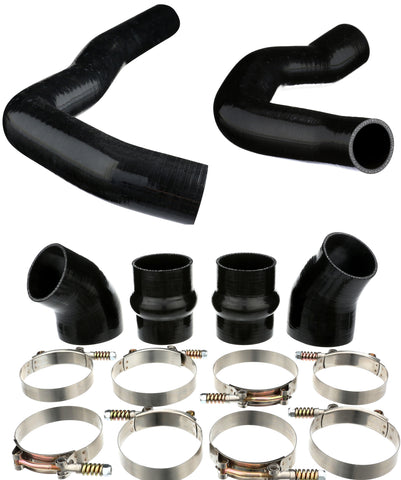
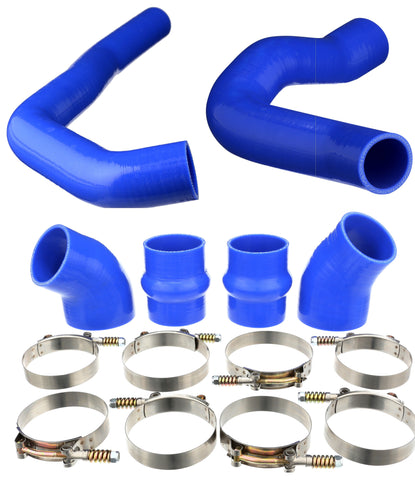
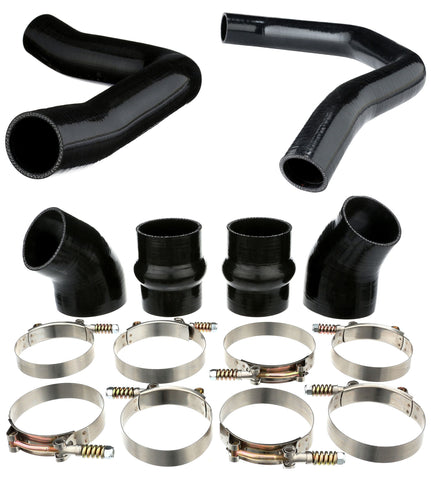
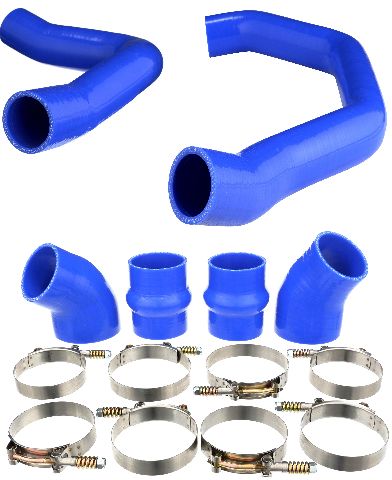
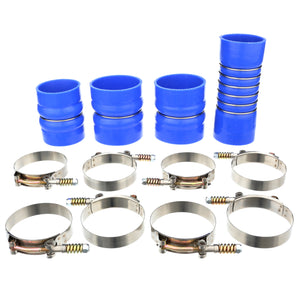
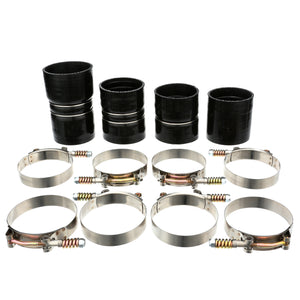
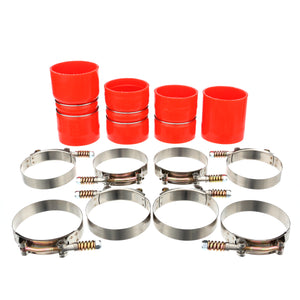
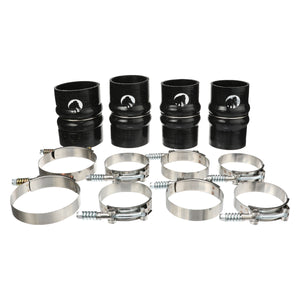
If diagnosis confirms a radiator-hose problem, Mammoth offers silicone coolant hose kits for these listed Duramax pickup applications:
| Model years | Product |
|---|---|
| 2001–2005 | Duramax radiator coolant hose kit |
| 2006–2010 | Duramax coolant hose kit |
| 2011–2016 | Duramax coolant hose kit |
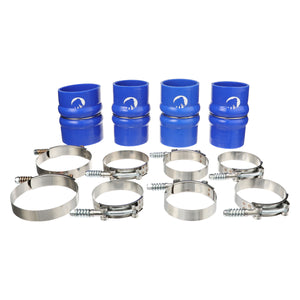
Check the product page for application details, kit contents, colors and current availability. A 2006 LLY takes the LLY kits, and a 2006 LBZ takes the 2006–2010 kit. If your engine designation is uncertain or the cooling system is modified, contact us before ordering rather than choosing by model year alone.
Our Duramax coolant hose fitment guide and Duramax coolant hose collection provide more information.
Replacing intercooler boots too?
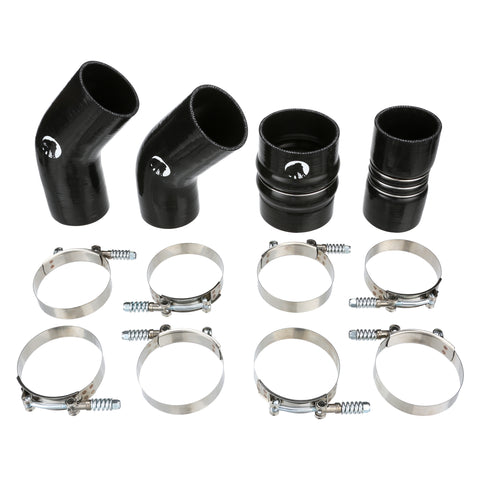
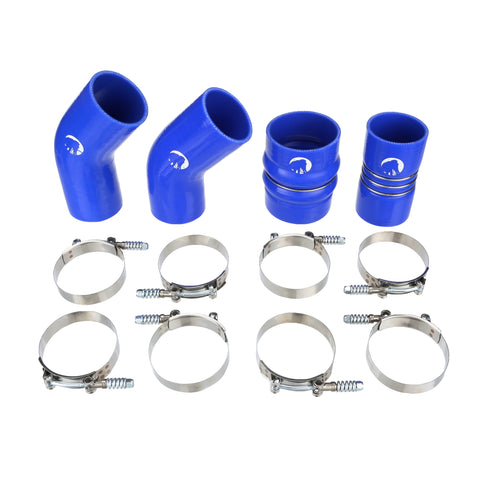
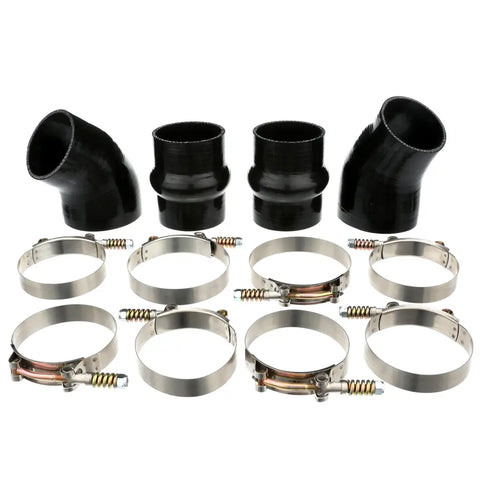
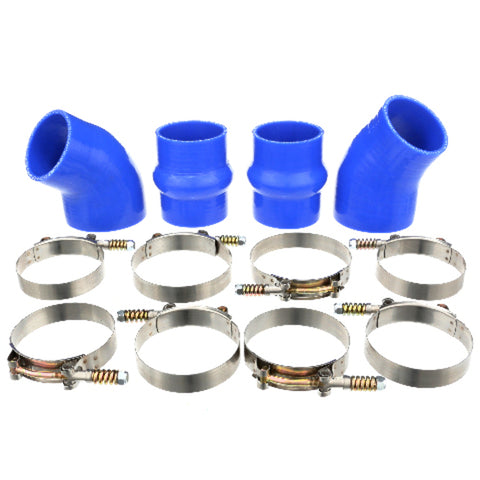
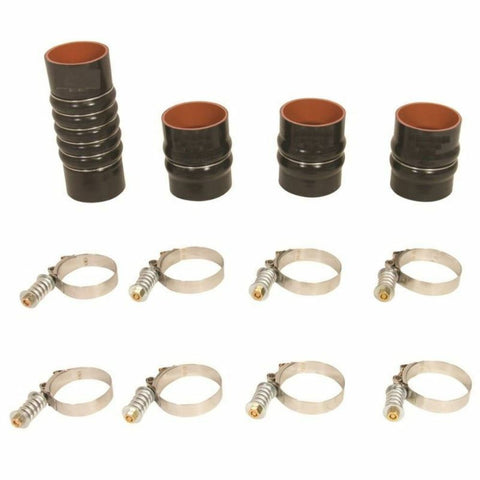
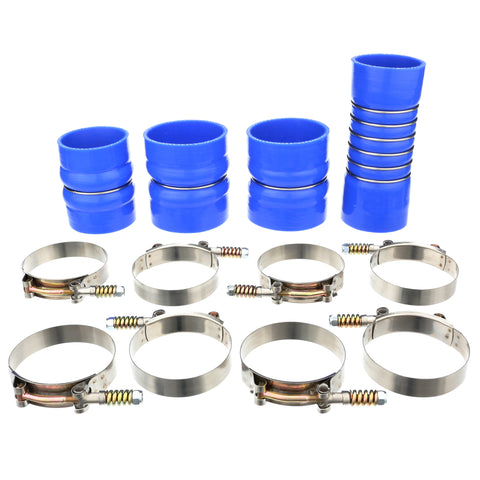
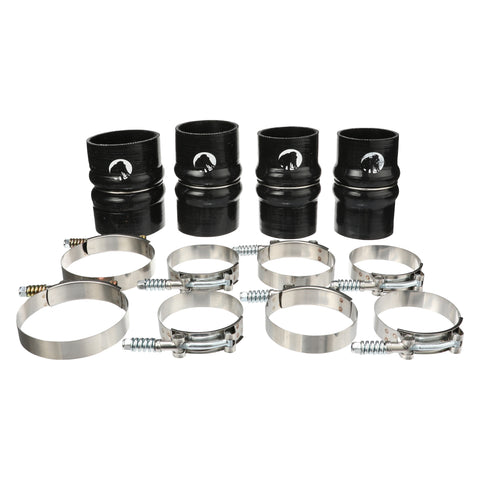
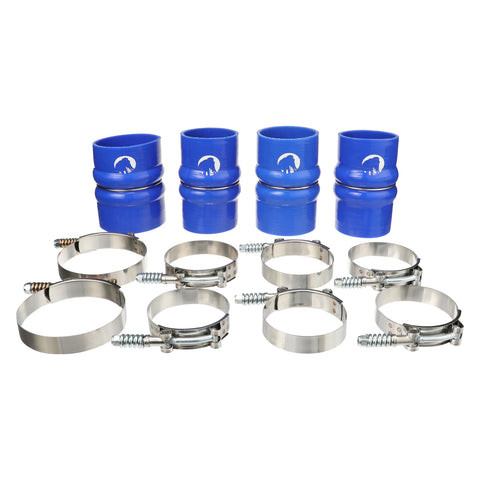
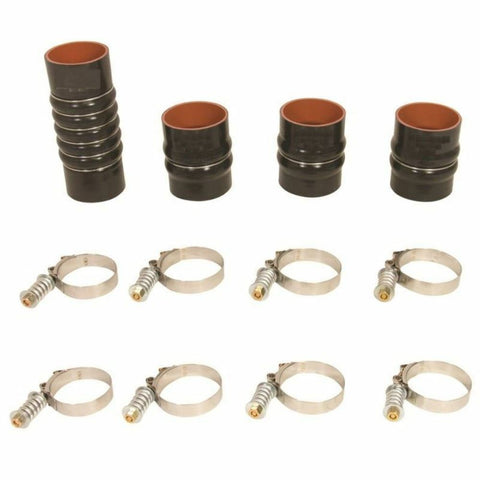
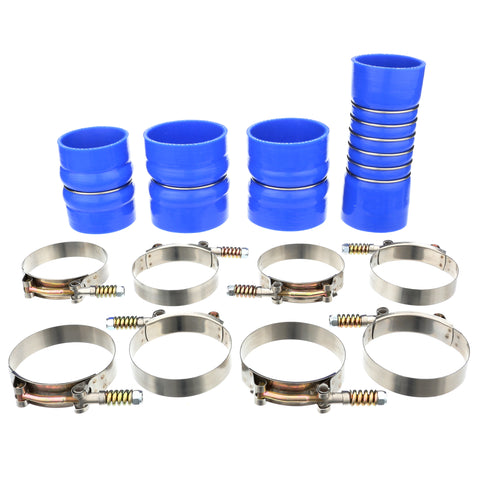
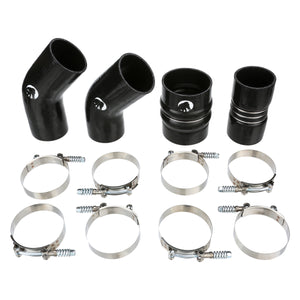
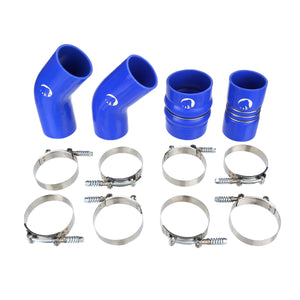
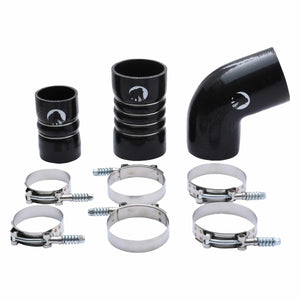
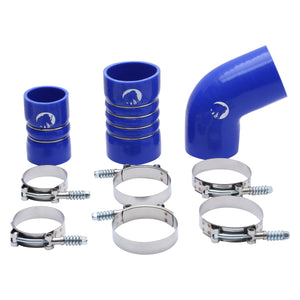
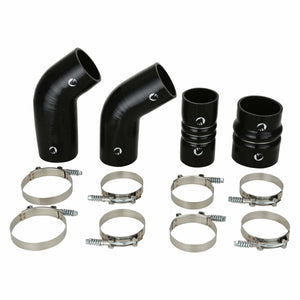
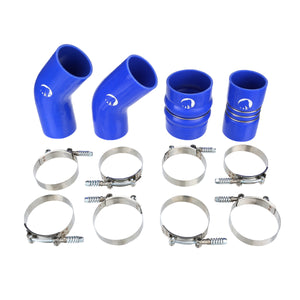
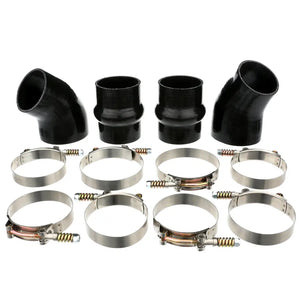
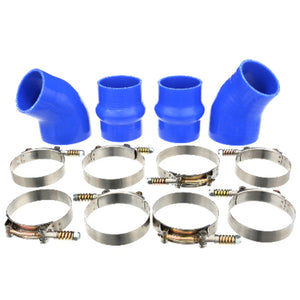
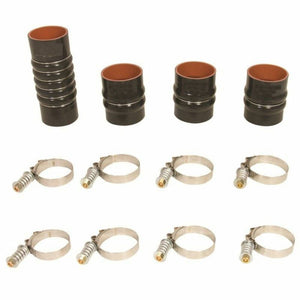
For owners who also need charge-air boots, combination kits are listed for 2002–2004 LB7, 2004.5–2005 LLY, 2006–2010 and 2011–2016 applications.
Intercooler boots and coolant hoses serve different systems. Coolant loss alone is not a reason to replace the intercooler boots.
What about 2017 and newer L5P trucks?
Do not apply the older-engine diagnosis or hose-fitment table automatically to an L5P.
GM has separate leak-location guidance for specified 2017–2021 L5P/L5D applications. It identifies several possible paths involving hoses, clamps, pipes, seals and other components. The correct inspection depends on the model and engine. GM bulletin 18-NA-098.
For an L5P hose inquiry, contact us with the year, model and exact hose location before ordering.
Installing replacement hoses
Follow the truck's service information and the hose-kit instructions. In particular:
- Use the specified coolant and the correct draining, filling and air-purging procedure.
- Inspect mating surfaces, fittings and clamps rather than assuming the hose is the only damaged part.
- Seat the hoses correctly and use the specified clamp type and tightening procedure. Do not guess at torque.
- Correct rubbing or interference that could damage the replacement hose.
- Verify that the repair is leak-free and monitor the cold coolant level afterward using the owner's-manual instructions.
Our T-bolt clamp sizing guide explains clamp sizing; it is not a substitute for application-specific installation instructions.
Frequently asked questions
Can I drive while the truck is losing coolant?
Do not keep driving with a known coolant leak. Have it diagnosed and repaired. If it overheats, produces steam or loses coolant rapidly, stop safely and arrange towing. Let the engine cool completely before checking the level, and never remove a hot pressure cap.
Does a low coolant message always mean a leak?
No. Depending on the application, an incomplete fill or a warning-system issue can also be involved. Confirm the actual cold coolant level and have persistent warnings diagnosed. Do not dismiss repeated coolant loss as normal.
Will silicone hoses stop my coolant loss?
Only if the failed hose or its connection is the source. New radiator hoses will not repair an EGR cooler, water pump, pressure cap or internal engine fault. See our silicone-versus-rubber radiator hose guide for a material comparison.
Should I replace both radiator hoses?
Inspect the other hoses and connections when one fails. Replacing a complete set may be practical if multiple hoses are deteriorated, but one leak does not prove that every hose needs replacement.
Do Mammoth hoses have a warranty?
Mammoth products are covered by a lifetime limited warranty, subject to the policy's eligibility, terms and exclusions. Review the warranty policy for details.
Find the leak before choosing the repair
Start with inspection, follow the correct testing process and fix the confirmed cause. Catching a hose or connection leak early matters, but accurate diagnosis also prevents replacing hoses when the fault is somewhere else.
Related: 6.7 Cummins losing coolant · Duramax P0299: boost leak or bad turbo? · Radiator-hose leak signs
Featured products






Diesel engines have long been the default option for light-duty/heavy-duty truck buyers. However, like gasoline-powered engines, they can also break...

The best diesel pickup engine is the one that suits your work, budget and the condition of the truck you’re buying. An engine’s reputation is...

The 7.3 Powerstroke, a legendary diesel engine, stands tall as a prime upgrade candidate for several compelling reasons.